Men & Teens Teen Guides

Teen Guides

Skin Care

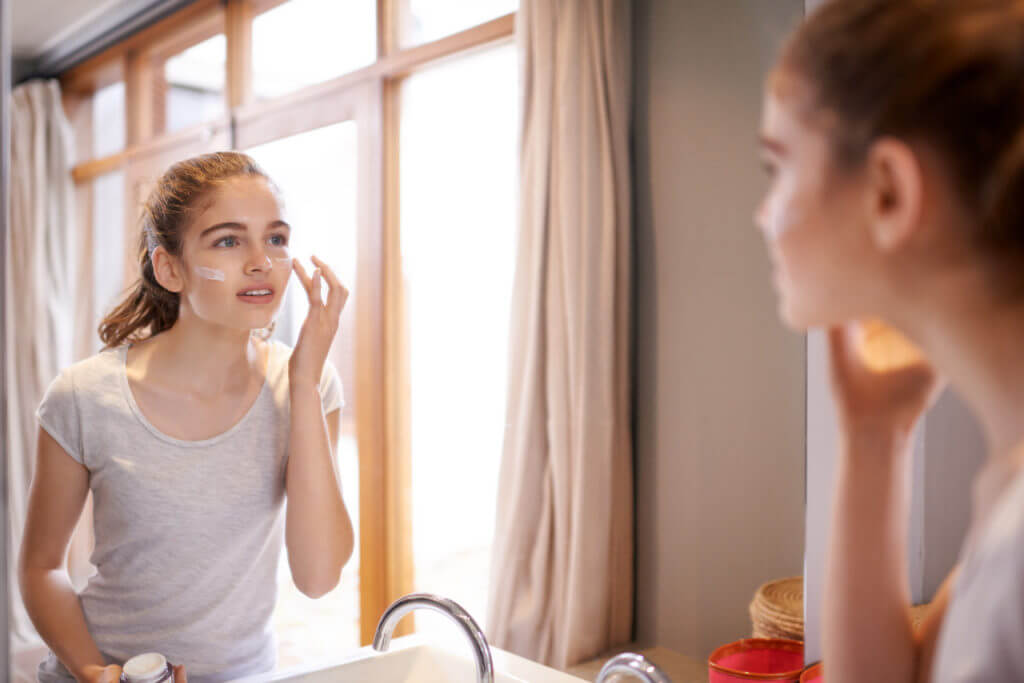
Chemotherapy and radiation can change your skin – make it very dry, itchy, flaky, or irritated. A few simple steps in the morning and at night can help you feel better and look healthier. Ask someone on your cancer care team about which type of products are best for you right now.

Cleanser

  • Cleanse your face in the morning and at the end of each day to help prevent pimples and acne flare-ups. Use warm water and a mild soap, foaming gel, or creamy cleanser that can be gently wiped off.

Moisturizer

  • A moisturizer replenishes the moisture your skin may lose during chemotherapy, as well as from exposure to heat, dry weather, or sun. If possible, apply moisturizer while your skin is damp.

Sunscreen

  • Use a sunscreen with an SPF (sun protection factor) of 30 or higher whenever you are outside. This is a must for everyone, but it’s especially important for anyone getting chemotherapy as their skin may be more sensitive to sun and burn very easily.

Lip Protection

  • Colorless lip balms with an SPF of 30 or higher can protect your lips from sun damage, wind, and cold while also providing moisture.

Makeup

Girls and Guys – Maybe you’ve used makeup before or maybe not. We talk about a number of options that can help enhance your good features, camouflage skin changes caused by cancer treatment, and brighten your overall appearance to help you feel better. You can choose whichever steps are right for you.

Concealer

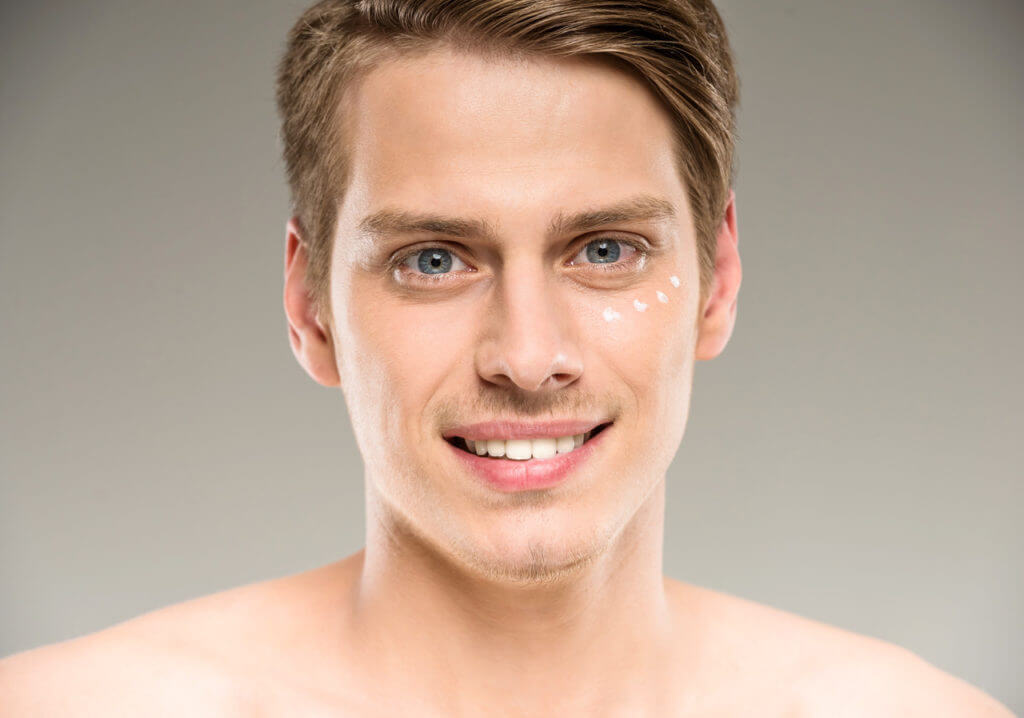
  • A concealer helps hide imperfections in your skin and can cover the skin changes you may experience during treatment, such as dark circles under your eyes, redness or skin color changes, and discoloration. Pick a concealer that closely matches your skin color.
  • Apply the concealer in dots to the areas you wish to correct. Medicated concealers are also available to help fight acne while concealing flare-ups, but talk to your cancer care team before trying any of them.
  • Blot or lightly spread the concealer evenly around the area with your finger or a sponge.

Foundation

  • If you want to use foundation, look for one that matches your skin tone. Tinted moisturizers with an SPF of 30 or higher are a good way to add a little color while protecting your skin from dryness and the sun.
  • You may need a moisturizing foundation made for dry skin.
  • Lay the foundation:
  • Apply dots of foundation to your forehead, nose, chin, and cheeks with clean fingers or a disposable cosmetic sponge.
  • Blend outward and downward from the center of your face to the edge.
  • Blend well at the hairline and the jawline.
  • Hygiene tip: Apply makeup with clean hands or use disposable cosmetic sponges; remember to use a new sponge for each application.

Powder

  • A light application of a translucent powder will set your foundation and dim any “shiny” areas on your face.

Blush

  • Blush can give you a vibrant, healthy look. Use a brush to fluff powder blush over your cheekbones and out toward your ears. Contouring with brownish powder can help hide puffiness due to weight gain, while light-colored blush can help enlarge areas on a thin face.

Bronzer

  • Bronzers come in both liquid and powder forms. For a liquid bronzer, use the same application technique described for foundation. When using a powder bronzer, use a cosmetic brush or sponge to apply the product to the face. Guys may prefer to use a bronzer versus a blush product. Bronzers should be applied after moisturizing the skin.

Eyebrows

  • You may need to fill in thinning brows or re-create an entire brow. Here are some tricks to help you re-create that brow:
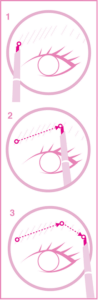
  • Find your brow bone with your fingertips. This is your natural brow line where you will re-create your brow. Using a brush-on eyebrow color or a pencil in a shade that matches your eyebrows, hold the pencil or applicator straight up against your nose, parallel to the inside corner of your eye. This is where the eyebrow should begin. Draw a dot just above the brow bone.
  • Looking straight ahead, place the pencil parallel to the outside edge of the colored part of the eye. Place a dot where the highest point of the brow should be.
  • To define where the outside edge of the brow should go, place the pencil diagonally from the bottom corner of your nose past the outside corner of your eye, and draw a dot. Be sure the outer edge of the brow is not lower than the inside one, as this will create a down-turned expression.
  • Once you have the dots placed, connect them into a brow line with feathery strokes of color, making the brow fuller on the inside and thinner as you move toward your hairline.
  • You might find it easier to use a brow stencil. These are usually available in stores offering skin care and cosmetic products.
  • Helpful tip: Sharpen your pencil before each application.

Eyeshadow

  • Eyeshadow brightens your look and helps define your eyes.
  • Application tips:
  • Choose a neutral matte eyeshadow palette.
  • Sweep a light shade over the entire lid and up to the brow.
  • Apply a darker shade in a sideways “V” on the outer corner of the lid, starting from the lash line and extending into the crease.
  • Apply a highlight shade under your brow, if desired.
  • Blend well to soften the effect.
  • Hygiene tip: Use a new cotton swab for each color and each eye.

Eyeliner

  • Eyeliner works to re-create the look of lost lashes, define the lash line, and create the illusion of full lashes.
  • Using a liquid or pencil eyeliner, draw a line using short strokes close to the lash line (a dark brown, gray, or black color liner works best).
  • Holding the eyeliner on a slant, starting from the inner corner of the eye, create the line at the very base of the lash line.
  • Repeat the above steps on the bottom lash line, if desired.
  • Using a cotton swab, gently blend.

Mascara

  • Mascara can restore a lush look to thinning lashes.
  • Apply first to the top side of the lashes and then to the underside.
  • Brush the mascara wand lightly across the lower lashes.
  • Completely remove mascara every night with a gentle eye-makeup remover. Try using a wash-off mascara instead of a waterproof mascara. It’s much easier to remove and doesn’t pull on lashes.
  • Hygiene tip: More than any cosmetic, mascara is prone to bacterial infection. Don’t pump the wand in the tube as this may introduce bacteria. Replace your mascara every month while getting treatment.
  • You can also brush the tip of the mascara wand lightly back and forth across the lower lashes for a more dramatic look.

Lips

  • The addition of color to your lips helps to brighten and enhance your overall look. For outdoor sports and leisure activities, use a lip protection balm with an SPF of 30 or higher instead of, or in addition to, lipstick. Some lipsticks also have an SPF of 30 or higher.
  • If your lips are very dry, use a moisturizing lip balm at night.

Nail Care

Chemotherapy can sometimes cause changes in your nails and nail beds. For instance, you may find that your nails are more brittle and break more easily, have grooves, change color, are more sensitive, and grow at a faster or slower rate. You may also notice that nail beds lift up. Keep your nails short if any of these changes happen. Nail changes almost always go away over time after treatment ends.

Tips for Keeping Nails Healthy

  • Do not cut your cuticles. Instead, use a cuticle stick to push them back.
  • Massage cuticle cream into your cuticles. This helps prevent dryness, splitting, and hangnails.
  • Wear gloves while washing dishes, washing your car, giving your dog a bath, or doing other chores. Try not to keep your hands in water for very long. This can lead to problems, like fungal infections of the nail bed.
  • Wear clear or colored polish or nail hardener to protect nails and keep them strong.
  • Use an oily non-acetone remover to take off polish. Acetone removers can be drying, and very dry nails can become weaker or more brittle during treatment.
  • Do not wear glue-on nails or acrylic or gel nail sculptures during treatment. They could increase your chance of infection.
  • Tell the doctor if you notice any signs of inflammation or infection, such as pain, redness, darkening, or lifting of the nail bed.
  • Avoid the nail salon during treatment to lessen your risk of infection. If you do decide to get a professional manicure or pedicure, bring your own clean instruments for the technician to use. And don’t let them cut your cuticles!

Hair Care / What to do when your hair’s not there

Hair loss is probably the most obvious appearance change caused by treatment. It occurs in varying degrees for different people: some lose all their hair; others find it simply looks thinner. You can deal with hair loss in a variety of ways that are fun, creative, and effective.

  • Before you start treatment, and if your doctor has told you that you will most likely lose your hair, consider cutting your hair short before you begin to lose it. Shorter hair looks thicker. Also, save a lock of your hair so you can match the color later if you decide to get a wig. Guys, a close-cropped haircut is a popular choice, and easy to care for.
  • Helpful tip: If you decide to shave your head, don’t shave it all the way to the scalp because this may cause irritation. It is recommended to cut hair to 1/8 of an inch.
  • When natural hair starts to grow back, check with your cancer care team and your hairstylist before using chemical treatments, including perms, color, or straighteners.

Wigs

Wigs today are fantastic! They’re easy to care for and can give the appearance of thick, healthy-looking hair without looking too much like a wig. They’re available for both girls and guys in a huge variety of ready-made and custom-made styles and colors. Here are some things to consider if you’re thinking about getting a wig:

  • The cost of wigs varies greatly.
  • Try on several wigs before deciding which to buy.
  • Bring your parent(s) or best friend to help you choose a wig.
  • Health insurance may cover the cost of wig; ask your doctor to prescribe a “cranial prosthesis.”
  • Wigs are made of either synthetic materials, human hair, or a blend.
  • Human-hair wigs are generally more expensive and require more care.
  • Most wigs have more hair than is needed so they can be cut and styled to fit your needs.
  • A hairstylist may be able to help you with wig fitting and styling.
  • Wear a wig cap to help protect your head from irritation and keep the wig secure on your head.
  • You may be able to get a free wigs:
  • Some American Cancer Society offices offer wig banks for those who are eligible. Contact your local American Cancer Society office to inquire.
  • EBeauty Inc. is a charitable organization that provides women access to wigs during cancer treatment. They supply a free wig to anyone who needs it.  Visit EBeauty.com for more information.
  • The “tlc” – Tender Loving Care catalog provided by the American Cancer Society offers a wide range of wigs, scarves, and other head coverings at affordable prices to help women with cancer who are experiencing hair loss. Visit tlcdirect.org for more information.

Wig Styling

  • Always use a vent brush or pick for curly styles and a wire brush for straight styles.
  • Avoid using standard hairbrushes because they can create excessive tension, over-stretching the hair and damaging it.
  • Think “reverse” when brushing your wig. Start from the bottom of the wig. Using a wire pick, gradually work the hair from the ends to the root area.

Wig Care – Here’s how to care for your wig!
  • When to wash:
  • Generally, a wig should be washed after 6 – 8 wearings in spring and summer, and 12 – 15 in fall and winter.
  • If you are physically active while wearing your wig, you should clean it at least once a week to remove the perspiration and dirt that can build up.
  • Other factors affecting how often to wash your wig include air quality and humidity (just as they do with your own hair).
  • How to wash/dry:
  • Before washing, brush straight styles gently but thoroughly with a wire brush. Brush curly styles lightly with a vent brush or pick, keeping the curls intact.
  • Fill sink with cool water, and add a cap of gentle shampoo or wig shampoo.
  • Turn the wig inside out, and gently immerse your wig and allow it to soak for two minutes.
  • Drain the sink and refill with fresh cool water, then immerse wig a few times to rinse.
  • For high shine and softness, apply a gentle conditioner or wig conditioner, and leave on for five minutes. Then rinse well by swishing in clean, cool water.
  • Gently towel-blot the wig to remove excess water. Do not squeeze or twist.
  • Place the wig on a wire wig stand or on a tall soda bottle to dry. (It takes about 8-12 hours.)
  • Never comb or brush a wig when it’s wet; wait until it’s completely dry.
  • Do not dry your wig in direct sunlight.
  • Be careful not to use high heat from hairdryers or curling irons on synthetic wigs.

Head Coverings

Turbans

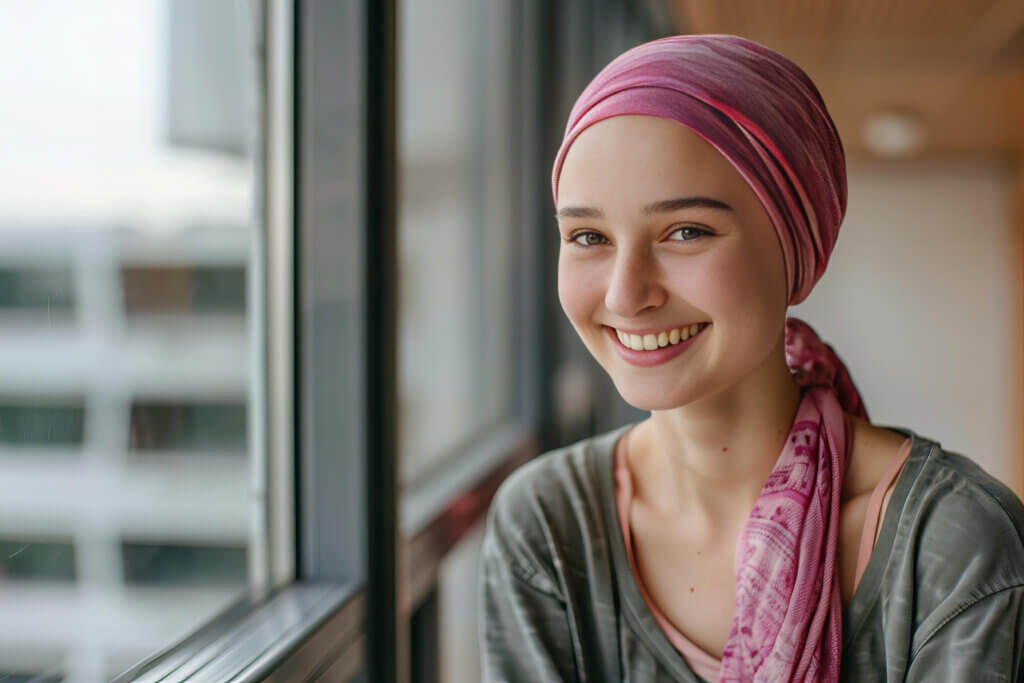
  • Turbans are inexpensive and a good choice for girls to wear at home instead of a wig. You can buy them ready-made or make your own with a scarf or bandana. Choose fabric that’s 38 inches (adult size) or 24 inches (younger teens) in length to wrap around your head and tie securely.

Scarf Tying

  • Instructions for tying an oblong scarf:
  • Drape scarf over your head, and let ends hang down evenly on the sides.
  • Tuck in excess hemline of scarf before securing in a knot at the nape of your neck. Tie a double knot in the back.
  • Bring one of the ends over your shoulder, if you like.
  • Try topping it off with a hat!
  • Helpful tip:
  • To add height to a turban or scarf, try “velcroing” or pinning a shoulder pad inside the turban or scarf at the crown of the head, or put the pad under a wig cap and wear the turban or scarf over the wig cap.
  • Choose a scarf made of a soft cotton blend, rayon, or polyester to help keep it from slipping.
  • A cotton headband can also be used to secure a scarf on the head.

Square Scarves and Bandanas

  • Square Scarves and Bandanas are great for guys and girls for a quick, easy, and inexpensive way to cover your head. Cotton bandanas are also cool and comfortable and especially good to wear when playing sports.
  • Instructions for tying a large square scarf or bandana:
  • Fold bandana in half into a triangle.
  • Put the flat edge of the triangle at your hairline, and center it on your forehead at your hairline.
  • Tie the two corner points together in a knot in back of your head at the base of your neck.
  • You can tuck the third point into the knot, and tuck any extra fabric behind your ears.
  • Helpful tip: To make scarves and turbans more visually interesting, try layering them or using accessories like pins and headbands. You can also use earrings as another way to accessorize.

T-shirt Wrap

  • The T-shirt wrap is cool and comfortable and especially good to wear when playing sports. Here’s how to make one:
  • Use a large, all cotton T-shirt.
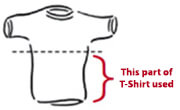
  • Cut straight across the shirt, just under the sleeves. You now have two pieces – the top 1/3 of the shirt (neck and sleeves) and a fabric “tube,” which is the bottom 2/3.
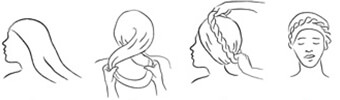
  • Take the finished T-shirt hemline of the “tube” and center it on your forehead at your hairline.
  • Holding each side of the tube at the back of your head, cross the piece of fabric in the right hand over the left, creating a figure “8.”
  • Twist the fabric at the bottom of the figure “8” before pulling the lower half of the figure “8” from the back up and around your head toward the front, creating a headband. This creates visual interest and makes the band tight enough to stay secure. Tuck in any extra fabric under the twisted band.
  • The final result will look like a cotton turban with a matching headband going around your head. You can accent the t-shirt wrap with mini bangs, a “halo” (a hairpiece designed with comfort in mind, as the top part of the head is left uncovered to provide breathability under a hat, scarf or other head covering), or even a clip on ponytail.
  • Now take the top 1/3 of the T-shirt, cut off the two sleeves at the shoulder, and use them as headbands.

Hats

Hats are a great accessory for both guys and girls. During treatment, hats are an easy and comfortable way to conceal hair loss and protect your head. Trying on hats can be fun, and there are a lot of styles to choose from. Did you know that some hats can be purchased with an attached hairpiece (such as a ponytail, bob, or bangs)? Check out wig stores, department stores, hair salons, and catalogs, and explore online to find a look you like.

Helpful Tip

  • Make sure that the hat you select feels good on your head and doesn’t irritate your scalp.

Nutrition

Maintaining proper nutrition is important during cancer treatment. The American Cancer Society offers a free guide called Nutrition for the Person With Cancer During Treatment. This guide is designed to help the person with cancer learn more about nutritional needs, manage eating problems during treatment, and deal with side effects. It also provides tips on getting good nutrition and meal planning. It offers suggestions for healthy eating before, during, and after treatment, as well as guidelines for sanitation, food safety, and food handling. Recipes for nutritious snacks, drinks, and soups are also included. A downloadable version of the guide is available at www.cancer.org or you can get a free copy by calling 1-800-227-2345.

  • The National Cancer Institute (1-800-4-CANCER) offers a free booklet Eating Hints: Before, During, and After Cancer Treatment, with lots of information, tips, recipes, etc. A downloadable version of this guide is available here.
  • Cook for Your Life offers free, hand-on cooking programs to teach healthy cooking to people touched by cancer, turning nutrition guidelines into practical, easy recipes that are designed specifically for the different stages of treatment, and to promote healthy survivorship.  For more information, visit cookforyourlife.org, call 212-799-3894, or write to info@cfyl.org

Exercise & Fitness

During cancer treatment, your body is working overtime to fight cancer and also stay well. The right types of exercise can help increase energy, reduce stress, and offset potential weight gain. Being fit is about having fun, performing your regular daily activities, and enjoying sports and leisure activities.

  • Fitness includes cardio endurance, muscle strength, and joint flexibility. Walking, hiking, playing soccer or basketball, swimming, biking, and other types of aerobic exercises contribute to fitness.
  • Don’t get discouraged if your exercise capacity decreases during treatment. This is normal and expected.
  • Pace yourself. Start off slowly, and increase the duration of exercise as you are able. Don’t overdo it. Listen to your body, and rest as needed.
  • Set reasonable goals for yourself. Talk to your cancer care team about what you can safely do.
  • Keep notes on your progress. Over time, you’ll see and feel the improvement!
  • Exercising with a partner can help keep you motivated and encouraged.
  • Talk to your doctor or physical therapist about physical activity and any possible limitations you need to keep in mind.
  • If your platelet count is low, avoid contact sports and activities like skate-boarding, mountain biking, horseback riding, and weightlifting until you and your parents have talked with your doctor.
  • It’s generally recommended you drink at least 6 to 8 tall glasses of water each day. Even more fluid may be needed during treatment. Talk to your team about how much fluid you need each day.

Social Life

Friends

  • Your relationships with your friends may be affected by cancer, too. Your friends may feel awkward around you and not know what to say or do. They may have questions about whether cancer is contagious, or about appearance-related side effects such as hair loss. Be positive and honest with your friends. Assure them that you’re not contagious, and, yes, your hair will grow back! Some kids will probably shy away from you, but your real friends will stay that way, no matter what.

Relationships

  • Whether you’re dating or not, you’ll be thinking about it soon. Relationships are exciting, confusing, wonderful, and complicated. Just remember a couple of things. Remember to practice safe sex, or better still, choose not to have sex at all. If you are sexually active, you must take the same healthy safe-sex precautions as everyone else. In fact, they’re extra important during treatment. Protect yourself against sexually transmitted diseases (STDs). Remember, your risk for infection is higher during treatment, and even “mild” infections can be dangerous during this time. It’s also very important to not get pregnant or get someone pregnant while getting cancer treatment. Many treatments can cause damage to sperm cells and/or a growing baby.
  • Before you begin or continue a sexually active relationship, talk to your parents, doctor, nurse, or social worker. This may not be easy, but you need to be sure sex is safe for you while you’re getting cancer treatment.

Unwind

  • It’s important to find a way to relieve stress. Exercise is a great way to do that. Massage therapy is also a popular way to reduce stress. Relaxing your muscles can relax your mind as well. Other techniques, such as yoga, deep breathing, and meditation may also be helpful. Journaling, or writing down your thoughts and feelings (electronic or hard copy!), is another way that you can care for yourself. It provides you an opportunity to work out your feelings and emotions, which may help you relax and feel more hopeful about the future. Discuss these options with your parents and your cancer care team.

Tobacco

  • For starters, smoking is a killer! It’s also expensive, causes bad breath, and causes smelly clothes and hair. Your body is under enough stress. Don’t add to it by smoking or using smokeless tobacco. Any form of tobacco is nasty and bad for you. Still, if you do use tobacco, e-cigarettes, hookah, chew, or anything like this, talk to your cancer care team. Make sure it won’t interfere with your treatment and get help to stop.

Drugs

  • You’re already doing drugs – chemotherapy drugs, and your kidneys and liver are working very hard to handle them. Alcohol and other drugs can interfere with your treatment and add further stress to your organs. The use of drugs and alcohol can affect how your treatment works and can cause you further harm. Again, be sure your cancer care team knows about what you use and can help you manage it.

Tattoos & Body Piercing

  • Remember, you’re at an increased risk for infection. Why chance it now? If you still think it’s something you want to do, it’s important that you talk it over with your cancer care team first.

Music & Dancing

  • By all means, continue to enjoy them! Dancing is great exercise, but be careful in crowds.

Radiation Treatment

  • Don’t wash off any marks your doctor or radiation therapist may have applied to your skin.
  • Use clear, warm water instead of soap and creams in the treatment areas, patting dry very gently.
  • Avoid exposing treated areas to the sun, and do not use sunscreens on these areas during treatment, unless your doctor says it’s OK.
  • If the treatment area itches, consult your radiation therapist. Prescription creams or a light sprinkling of cornstarch may help.
  • If your skin continues to feel irritated while you’re getting radiation therapy, ask your doctor or radiation therapist to recommend a moisturizer and sunscreen.
  • Don’t use any cosmetics, perfumes, or deodorants on treated areas without checking with a radiation therapist first.
  • Your skin may develop temporary color changes (redness or darkening) during treatment, and that can be normal. Just be sure to let your doctor know about any signs of infection or other changes in skin color if they develop.

Chemotherapy

  • Chemo can be hard on your skin, so be especially kind to it during treatment.
  • Use mild, gentle soaps, gels, or creamy cleansers with lukewarm (not hot) water.
  • Use a good moisturizer with an SPF of 30 or higher.
  • Apply moisturizer to damp skin, if possible.
  • If you have acne, ask your doctor about what types of skin care products are best and safest for you.
  • Do not use products that contain active ingredients that could irritate the skin, including exfoliating and abrasive skin care products, alpha hydroxyl acids (AHAs), retinol, and alcohol.

Handling Skin Care and Cosmetic Products

  • To maintain cleanliness and freshness, wash your hands before applying skin care or cosmetic products.
  • Use a disposable hand cloth or a clean towel to dry your hands.
  • When on the go, use travel-size hand sanitizer to protect against germs.
  • Don’t put your fingers directly into product containers because bacteria might be put into the product.
  • Use cotton balls, sponges, spatulas, and/or cotton swabs to apply lotions or creams. And don’t “double dip” your applicator in the product!
  • Always close containers tightly after use.
  • Don’t share your skin care or cosmetic products with anyone, not even a close member of your family.
  • Discard and replace makeup as recommended by the manufacturer.
  • Don’t use saliva or water to moisten any skin care or cosmetic products.

Sun Protection

The sun can have harmful effects on skin at any time of the year. However, radiation and chemotherapy treatments, as well as some medications, can increase your chances of sunburn and skin damage.

  • As a general rule, when you’re getting radiation treatment, don’t expose your treatment areas to the sun.
  • Consult your doctor before applying sunscreen or any cream to your treatment areas.
  • Choose a broad-spectrum sunscreen that protects against UVA and UVB rays in an SPF 30 or higher.
  • Use a sunscreen that’s specially formulated for your face.
  • Apply sun protection daily and liberally – a dollop about the size of a golf ball – to all exposed skin, including the arms, legs, neck, and face, as well as the ears, scalp, side and back of the neck, and upper chest area.
  • Get in the habit of applying sun protection every morning, about 20 to 30 minutes before going outside, and reapply often –at least every two hours – especially after swimming, sweating, or toweling off.
  • Remember that you’re still exposed to UVA and UBV rays even in shady areas.
  • Avoid the direct sunlight between the hours of 10 a.m. to 4 p.m. when UV light is strongest.
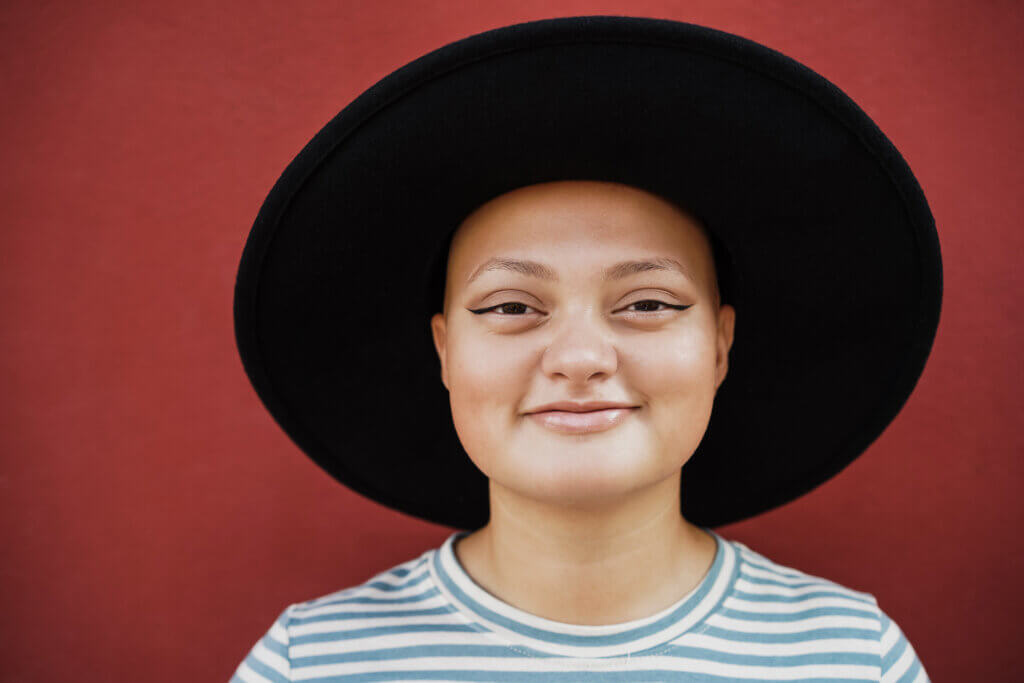
  • Don’t forget to wear a hat – preferably one with a wide brim of about 3 inches.
  • If wearing makeup, apply sunscreen first.
  • It doesn’t add up! If your moisturizer and foundation both have an SPF of 15, it doesn’t mean that you’ll have a protection of SPF 30.
  • Don’t forget your eyes; they need protection too. Wear sunglasses with 100% UVA/UVB protection.

Body Care

A relaxing bath or gentle shower can be a way to ease stress.

  • Use lukewarm water when bathing or showering.
  • If possible, instead of showers, take baths laced with a gentle bath oil. Use a fragrance-free bath oil that dispenses easily in water.
  • Choose soaps, body washes, and body lotions that are formulated for sensitive skin.
  • Avoid using abrasive body scrubs.
  • Gently pat your skin dry with clean, plush towels. Do not rub.

Cheat Sheet

Look fresh in minutes.

  • Tap concealer over dark under-eye circles, blemishes, or broken capillaries.
  • Smooth tinted moisturizer with an SPF of 30 or higher over clean skin to hydrate and protect.
  • Smile, and dust powder blush or bronzer on apples of your cheeks; apply what’s left on forehead, chin, and nose for a healthy glow.
  • Define brows with brow pencil or powder, and apply mascara to upper lashes.
  • Hydrate and protect lips with a lip balm or gloss that contains an SPF of 30 or higher.

Hygiene Tip

  • Change your toothbrush every month during treatment.

Remember

  • Your cancer treatment may make you very sensitive to perfumes in products. You may want to choose unscented formulas.